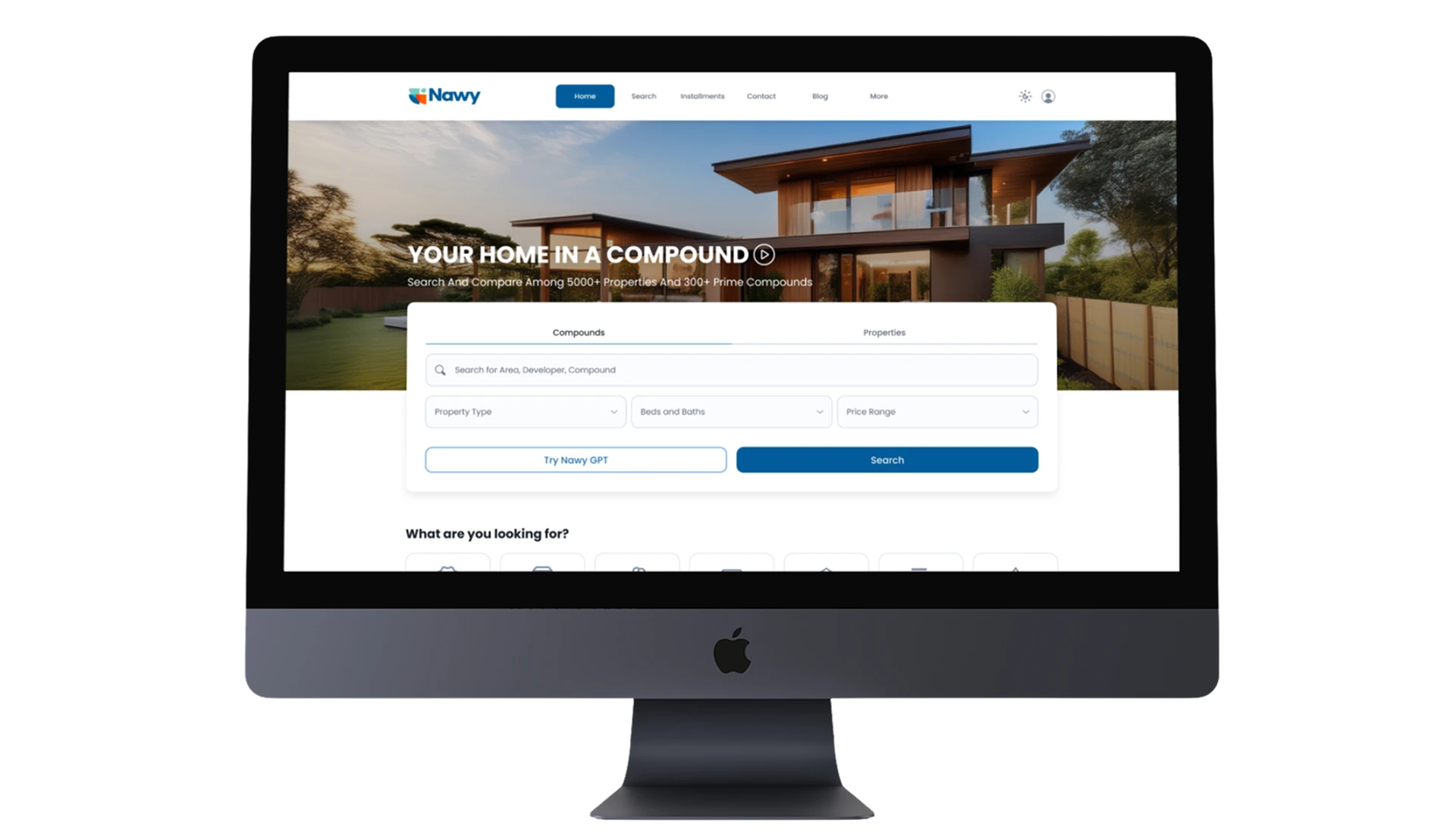
Nawy
Largest Proptech in Africa
Nawy's listings were organised the way the sales team talked to buyers: compound first. Research showed buyers think unit first. Reframing the listing around the unit cut search-page drop-off from 58% to 13%.
Case studies
The problem
Nawy is the largest proptech platform in Africa. Listings and search are where most people decide whether to keep exploring or leave, and 58% of them left.
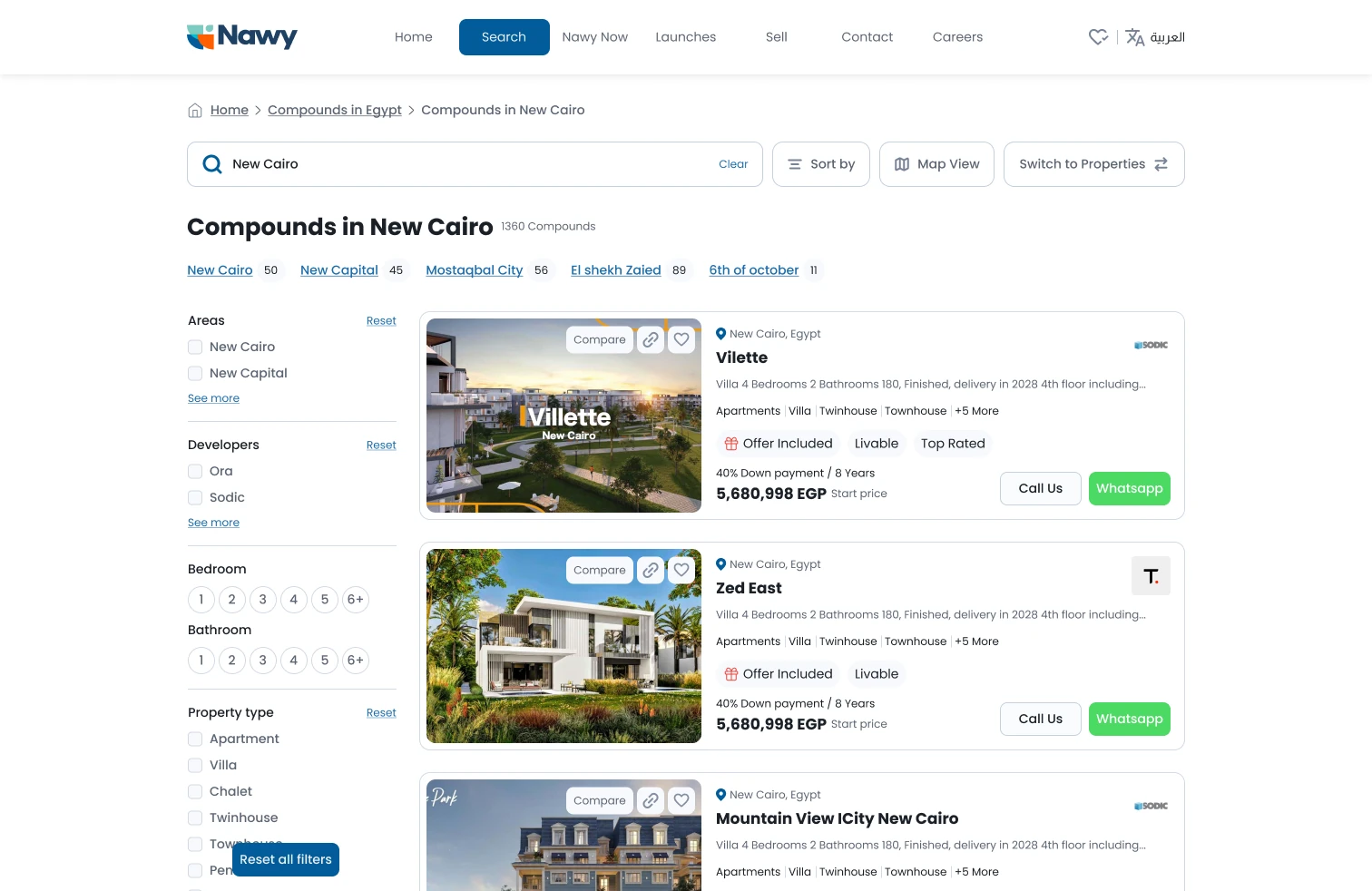
Listings were structured compound-first: you browsed compounds, then drilled in to find units. That mirrored how sales qualified a lead on the phone, "Which compound are you interested in?", and stakeholders were confident it was right.
A 73% drop-off on the most important page in the product is not a styling problem.
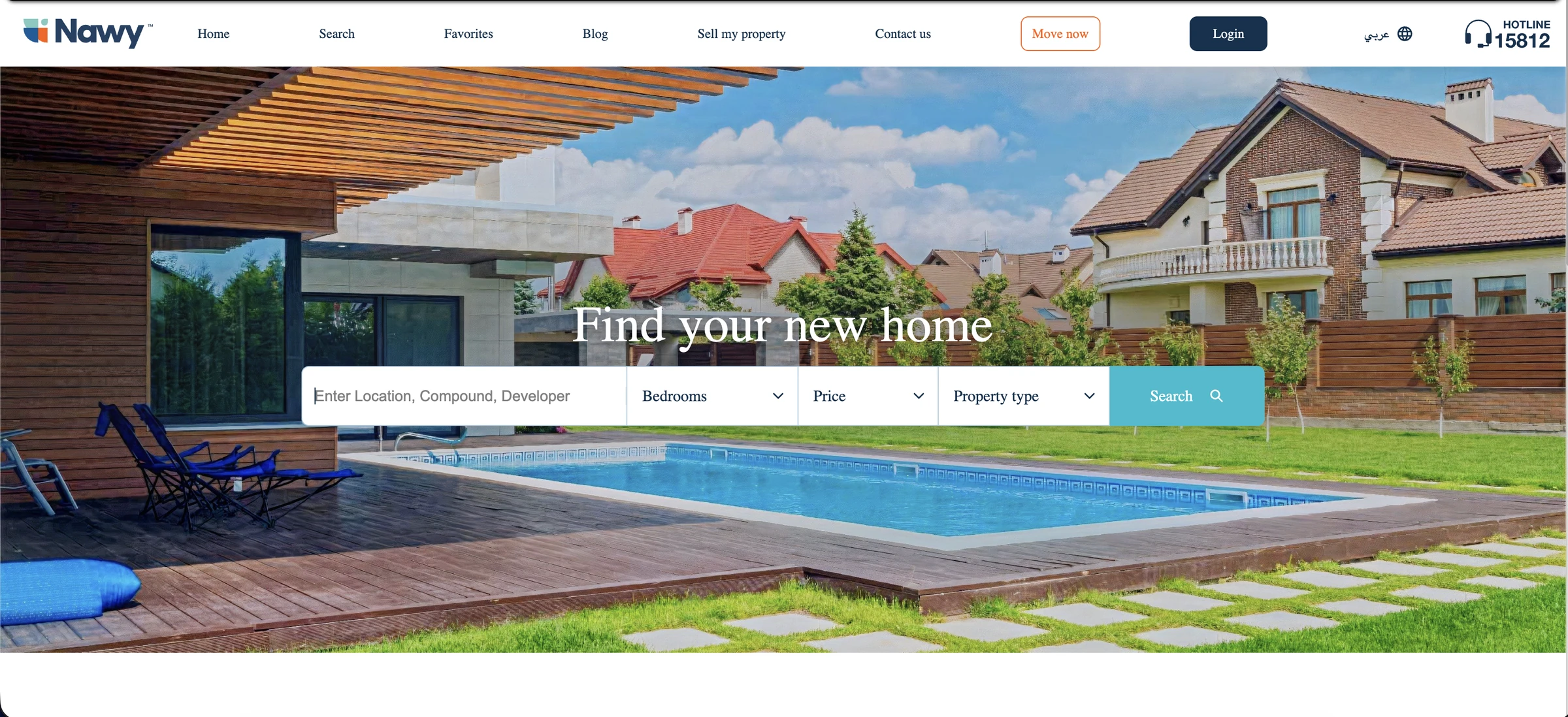
What research showed
I ran interviews with buyers to map how they actually search for a home. The finding was consistent, and it contradicted the model the product was built on.
I want a 3-bedroom apartment in a compound like SODIC.
The pattern across interviews
Buyers search unit-first. The compound is an attribute of the unit, a filter on it, not the way in. The old structure forced people to do the platform's filtering for it: pick a compound, then hope the right unit existed inside. If it didn't, they bounced.
The structure was the problem
The mismatch wasn't visual. It was structural. The product's information architecture asked a question buyers weren't ready to answer.
The product was organised around how the company sold. Buyers were organised around how they live.
The decision I had to argue for
Keep compound-first
It matches the sales script, needs no data restructuring, and nobody has to be convinced. But it keeps asking buyers to name a compound before they can see a single unit.
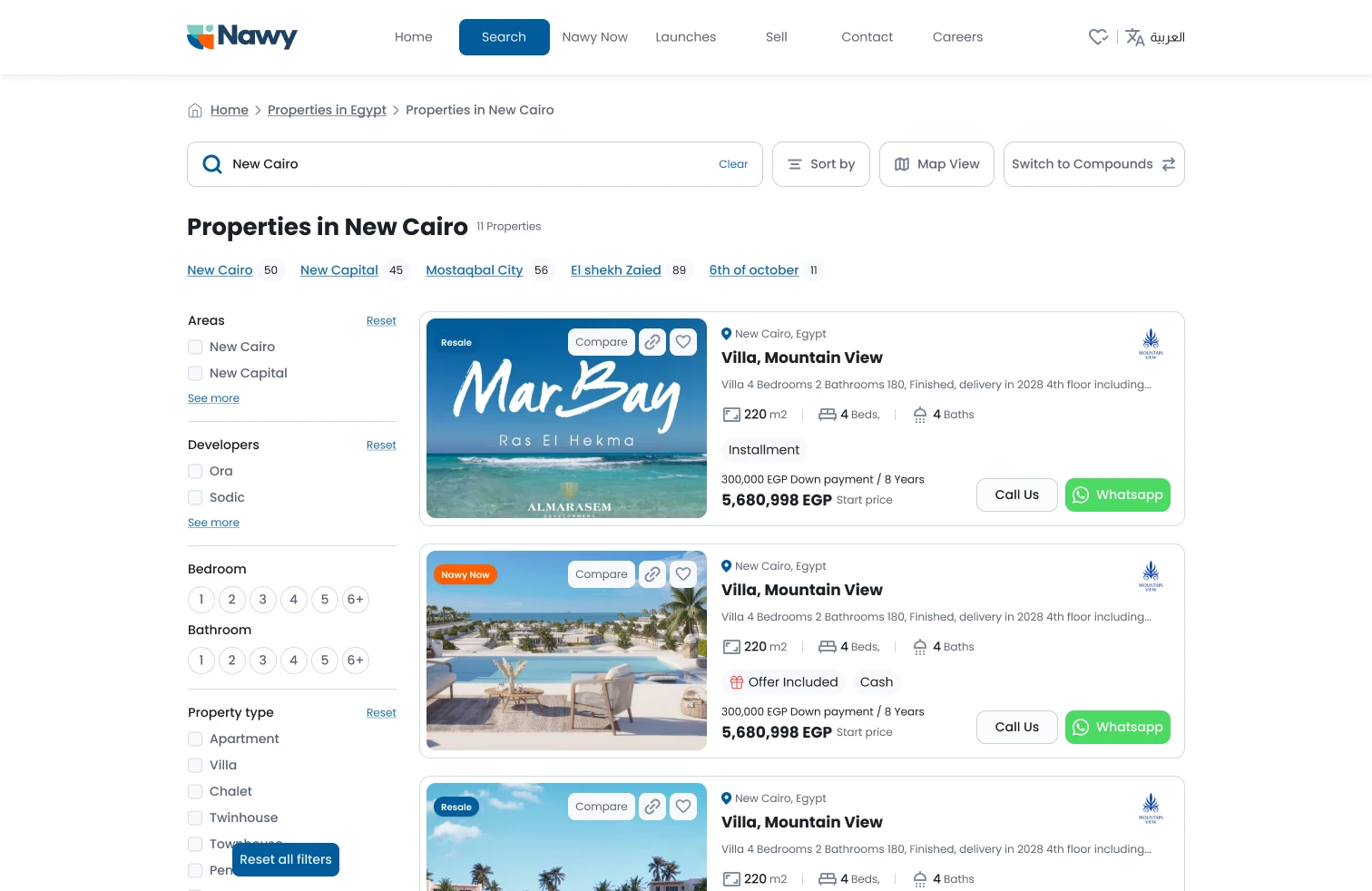
Lead with the unit
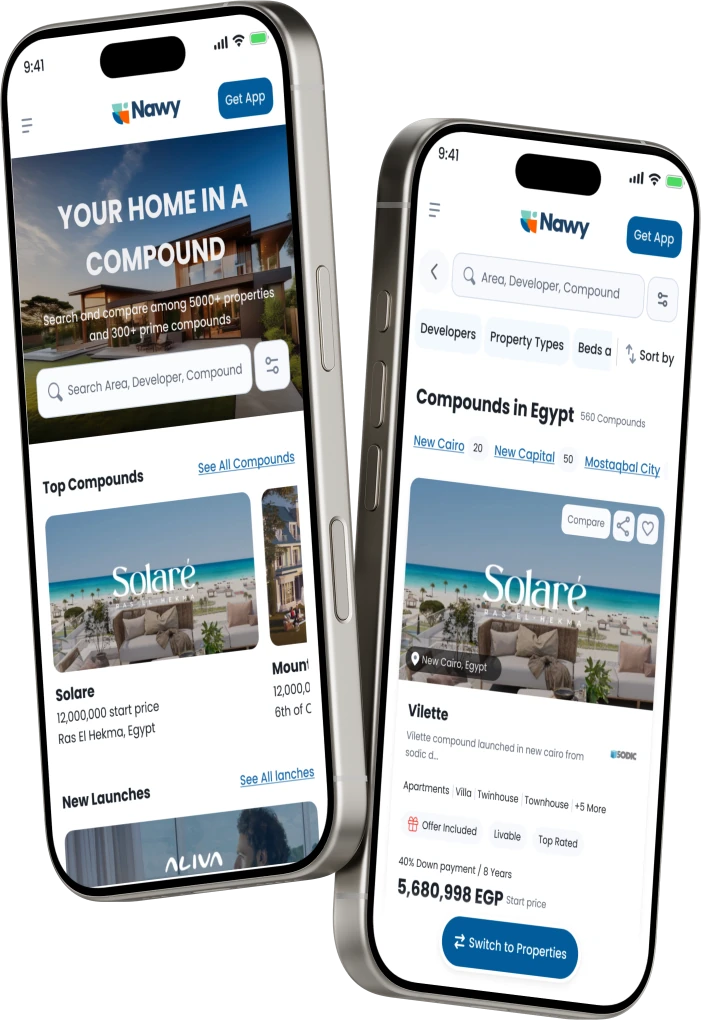
The card surfaces the unit, its type, size and key details, with the compound name beside it as context. Tapping a compound then reveals the units inside it.
A restructure of how results were assembled, and a harder conversation with stakeholders. I brought the interviews and the drop-off number rather than an opinion, and kept the compound view one tap away behind a property/compound switch, so the change read as an addition, not a rejection of how sales worked.
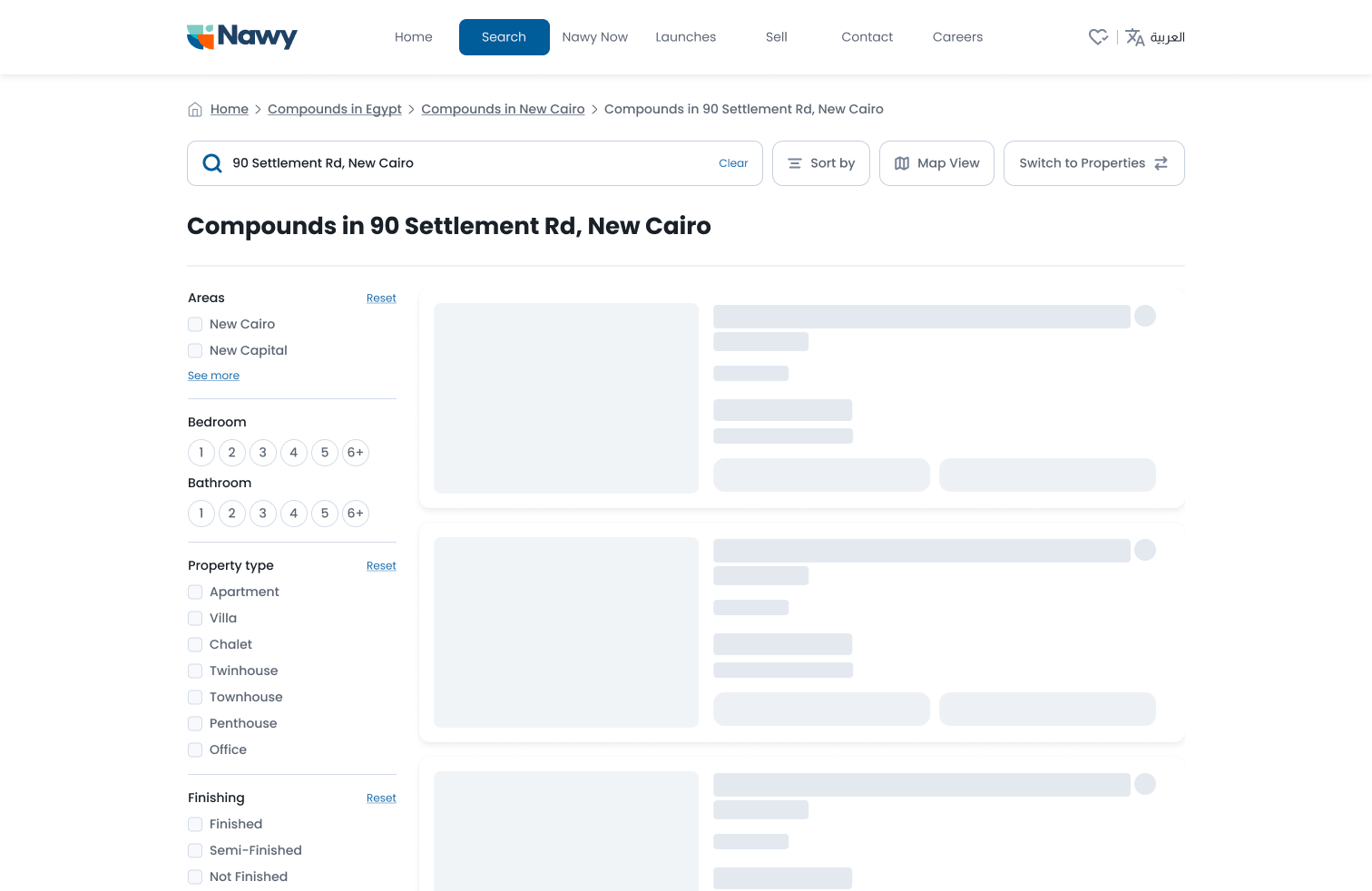
Filters people could actually use
The filter set had grown by accretion. Every request added another control, and the ones that decided a purchase were buried among the ones that didn't. I reordered them around the decisions buyers actually make.
- Payment plans and instalment years promoted to first-class filters
- not footnotes
- Property type and finishing expanded
- because buyers genuinely filter on both
- Every filter group resets independently
- so nobody has to start over to change one thing
The test wasn't whether the filters looked cleaner. It was whether someone could go from "I have EGP 20K a month" to a shortlist without asking anyone.
Removing the sticker shock
A second research thread looked at how developers actually price and sell. Leading with the full property price created sticker shock. People bounced on a number in the millions before they understood that nobody pays it at once.
| Before | After |
|---|---|
| Starts at EGP 9M | Down payment from EGP 150K · instalments up to 9 years |
| or from EGP 20K / month |
Tapping the card now goes straight into the payment plan, so people explore affordability instead of bouncing on a big number. It widened reach to affordability-driven buyers, who were then qualified in the CRM, so volume didn't come at the cost of lead quality.
Also shipped
Try the prototype
Reflection
The lesson wasn't about cards or pricing. It was that the fastest way to move a metric is often to fix a mental-model mismatch, the product describing the world one way while its users live in another.
And the fastest way to ship that fix is to bring stakeholders evidence rather than taste, then give them a solution that includes how they work instead of overriding it.